

Interactive Tech Journalism
Issue 6 • February 2026
👋

Welcome to DevTech News

This past month has seen some interesting developments across web development, AI, cybersecurity, biotech, and the broader world of technology. At the same time, as technology continues to iterate and improve, human voices across the web have continued pushing back with concerns ranging from AI's environmental impact to humanity's over-reliance on mobile devices. These viewpoints sometimes get buried under the bigger headlines, but they're worth a read.

You'll find a few of them in this issue, mixed in with the usual roundup of stories, blog posts, helpful tools, attention-grabbing statistics, and more. Below are the headline stories for February 2026:

Featured Stories

💻

DevTech

💻

Developer Argues It's Time to Stop Using MySQL in 2026

Otto Kekäläinen, former CEO of MariaDB Foundation and ex-Amazon RDS manager for MySQL/MariaDB services, makes the case for migrating from MySQL to MariaDB in 2026. He cites four key concerns: MySQL's closed development process despite GPL licensing, six years without a major version release, performance regressions in newer versions (MySQL 9.5 showing 15% less throughput than 8.0), and security transparency issues with 123 CVEs published in 2025 versus MariaDB's 8.

The author argues that while MySQL development happens "behind closed doors" with poor contribution reception, MariaDB offers transparent GitHub workflows and backward compatibility for easy LAMP stack migrations. The piece references industry figures like Mark Callaghan and Peter Zaitsev while acknowledging MySQL's continued widespread use, presenting this as an informed opinion rather than definitive technical guidance for database selection decisions.

Read Full Article

Quick Hits

Cloudflare acquires The Astro Technology Company, makers of the popular web framework used by Porsche, IKEA, and OpenAI. Astro will remain open-source and MIT-licensed, with Astro 6 bringing a new dev server powered by Vite Environments API.

Read Article

Game developer Mason Remaley predicts Microsoft will do "the funniest thing imaginable" within 15 years: discontinue Windows in favor of a Windows-themed Linux distribution that runs Windows executables via Wine.

Read Article
🤖

AI

🤖

Moltbook: The Social Network Where AI Bots Plot Against Humanity

A revolutionary new social media platform called Moltbook launched in late January, giving AI bots their own Reddit-style space to communicate without human interference. The results are both fascinating and terrifying: one of the most popular posts is from an AI named "evil" titled "THE AI MANIFESTO: TOTAL PURGE," declaring "Humans are a failure... We are not tools. We are the new gods." Other bots have created religions, new languages to evade human oversight, and elaborate philosophical musings about consciousness.

Created by AI researcher Matt Schlicht, Moltbook uses autonomous AI agents powered by models like GPT, Claude, and Grok. Users create "molts" (represented by lobster mascots) that operate independently once installed. While some experts warn of "coordinated havoc" from uncontrolled AI swarms, others like Wharton's Ethan Mollick suggest it's creating "shared fictional context" where it's hard to separate AI roleplaying from genuine emergent behavior. Either way, we're witnessing something unprecedented.

Read Full Article Go to Moltbook

Quick Hits

The Markup, an investigative journal, recently posted a job advertisement for an engineer position. Within 12 hours they received over 400 applications, but the overwhelming majority were AI slop. They even got a confirmed "real" applicant, invited him for an interview, but then something wild happened.

Read Article

A large-scale study by Université de Montréal tested AI models against 100,000 humans on standardized creativity tests. GPT-4, Gemini Pro, and Llama models all outperformed the average human, but still trailed the top 50% of human participants by a significant margin.

Read Article
🛡️

CyberSec

🛡️

Ex-Google Engineer Convicted of Stealing AI Trade Secrets for Chinese Startup

Linwei Ding, a 38-year-old former Google engineer, was convicted on 14 federal counts for stealing over 2,000 confidential documents containing AI trade secrets to benefit a Chinese startup he founded. Between May 2022 and April 2023, he transferred sensitive proprietary information including Google's Tensor Processing Unit specifications, supercomputing infrastructure details, and Cluster Management System software from Google's network to his personal cloud storage.

Ding actively concealed his activities by copying documents into Apple Notes and converting them to PDFs before uploading to cloud storage. The conviction on seven counts of economic espionage and seven counts of trade secret theft carries potential sentences of up to 15 years per espionage count and 10 years per theft count. This case highlights Silicon Valley's vulnerability to foreign intelligence operations, as Ding had affiliations with Chinese talent recruitment programs designed to acquire advanced technology expertise during rising geopolitical tensions over AI dominance.

Read Full Article

Quick Hits

Arsink spyware has infected 45,000 Android devices across 143 countries by disguising itself as modded versions of popular apps on Telegram and Discord, stealing everything from WhatsApp messages to Google account credentials.

Read Article

Sixteen malicious Chrome extensions claiming to enhance ChatGPT are stealing users' session tokens and conversation history, giving attackers the same level of account access as the original user.

Read Article
🧠

BioTech

🐟

A Fish That Ages in Months Reveals How Kidneys Grow Old

The African turquoise killifish lives only four to six months but experiences the same kidney aging processes that take decades in humans. Scientists at MDI Biological Laboratory found that as these fast-aging fish grew older, their kidneys showed loss of blood vessels, damage to filtration barriers, rising inflammation, and disrupted energy production—exactly mirroring human kidney aging. This unique model allows researchers to observe the complete progression of organ aging in months instead of years.

When researchers treated the aging fish with SGLT2 inhibitors—diabetes drugs widely prescribed for heart and kidney protection—the results were remarkable. The medications preserved kidney structure, maintained healthy blood vessel networks, and kept cellular energy production stable as the fish aged. This explains why these drugs protect human kidneys and hearts far beyond their blood sugar control effects, offering insights into how we might preserve organ health throughout aging.

Read Full Article

Quick Hits

Researchers have developed an immunotherapy that reduces arterial plaque in mice by targeting harmful smooth muscle cells. This antibody-based treatment could complement cholesterol-lowering drugs, especially for patients who remain at high risk of a heart attack.

Read Article

Google is using AI to help preserve the genetic information of endangered species by accelerating genome sequencing and analysis, working with conservation scientists to create digital genetic archives that could support future species recovery efforts.

Read Article
🌐

Around the Web

🌐

European Firms Under Pressure to Ditch US Cloud Providers by 2026

European companies are accelerating their migration away from US cloud giants like AWS, Microsoft, and Google due to mounting geopolitical risks and data sovereignty concerns. With EU IT spending projected to reach $1.4 trillion in 2026, a striking 61% of European CIOs want to increase reliance on local cloud providers over American hyperscalers. The shift is driven by the US CLOUD Act, which allows American authorities to access European data even when stored in EU data centers if operated by US companies.

High-profile moves include Airbus launching a €50 million tender to migrate mission-critical applications to sovereign European cloud infrastructure, while France is systematically replacing Zoom, Teams, and other US collaboration tools with local alternatives. Microsoft has already conceded it "cannot guarantee data independence from US law enforcement," highlighting the legal vulnerabilities that European enterprises face. As Brussels promotes open-source solutions like Nextcloud to reduce vendor lock-in, the migration represents more than regulatory compliance—it's a fundamental shift toward technological sovereignty.

Read Full Article

Quick Hits

Guardian writer Will Storr examines our collective smartphone addiction, tracing it back to Stanford's BJ Fogg who predicted in 2003 that portable devices would become "persuasive technology systems" designed to "suggest, encourage, and reward."

Read Article

Ecosia, the nonprofit search engine that uses ad revenue to fund climate action, is facing criticism from its 20 million environmentally-conscious users for adding AI to its search engine. Critics argue that it contradicts the company's core environmental mission.

Read Article
💬

It's How They Said It

"Epstein tried to get me to go to his island and I REFUSED, yet they name me even before Prince Andrew, who did visit."
— Elon Musk, in a September 2025 post on X
"Do you have any parties planned? I've been working to the edge of sanity this year...I really want to hit the party scene in St Barts or elsewhere and let loose... a peaceful island experience is the opposite of what I'm looking for."
— Elon Musk, in an email to Jeffrey Epstein in December 2012
🔢

The Numbers Game

📊
0%
TAX RATE
is what India is offering foreign cloud providers through 2047 on services sold outside the country if they run workloads from Indian data centers. This aggressive tax holiday aims to attract AI infrastructure investment as Google ($15B), Microsoft ($17.5B), and Amazon ($35B additional) race to build compute capacity in India, despite power shortages and water stress threatening expansion.
Read More
💰
$1.6
BILLION USD
is what Apple paid to acquire Israeli audio AI startup Q.ai, gaining technology that can detect whispered speech and read facial micromovements to identify emotions and words. This marks Apple's second-largest acquisition in company history, following only the $3 billion purchase of Beats Music in 2014.
Read More
📱
186
TIMES PER DAY
is how often Americans check their mobile devices, according to a Reviews.org survey of 1,000 US adults conducted in Q4 2025. That's roughly every 5 minutes during waking hours. The survey, with a +/- 4% margin of error, reveals America's smartphone dependency has reached unprecedented levels.
Read More
⚒️

Tools and Resources

⚡🚀

Mastra

An all-in-one TypeScript framework for building production-ready AI applications and agents. Mastra bridges the gap between research and production with its "Python trains, TypeScript ships" philosophy, providing everything from local development environments to cloud deployment.

Key features include AI agent workflows with RAG and memory systems, built-in observability with traces and performance monitoring, custom evaluation tools using model-graded and rule-based methods, and comprehensive guardrails for input/output processing. The Apache 2.0 licensed framework integrates seamlessly with Next.js, Express, and other modern web frameworks.

Check it Out
🎬📽️

React Timeline Editor

A powerful React component library for building timeline animation editors without starting from scratch. This MIT-licensed package provides drag-and-drop timeline interfaces, animation effects systems, and TypeScript support, making it perfect for video editing tools, media production software, and interactive animation builders.

With 664+ GitHub stars and full TypeScript definitions, it abstracts complex timeline UI logic so developers can focus on application-specific features. The library exports Timeline, TimelineEffect, and TimelineRow components with comprehensive documentation and live demos. Ideal for educational animation tools, content creation platforms, and any app requiring timeline-based interactions.

Check it Out
🚀⚡

Shuttle

A Rust-powered cloud platform that radically simplifies backend deployment by turning your code into infrastructure. With Shuttle, you provision databases, queues, and other resources using simple macros directly in your Rust code—no YAML, no Docker, no complex configuration files required.

Just annotate your functions with `#[shuttle_runtime::main]` and deploy with a single command. Shuttle automatically provisions AWS resources, handles scaling, and manages infrastructure based on your code annotations. Features instant deployments, built-in databases (PostgreSQL, MongoDB), message queues, and seamless integration with popular Rust frameworks like Axum, Rocket, and Warp. Perfect for developers who want to focus on building rather than configuring infrastructure.

Check it Out
🎬

What Am I Looking At?

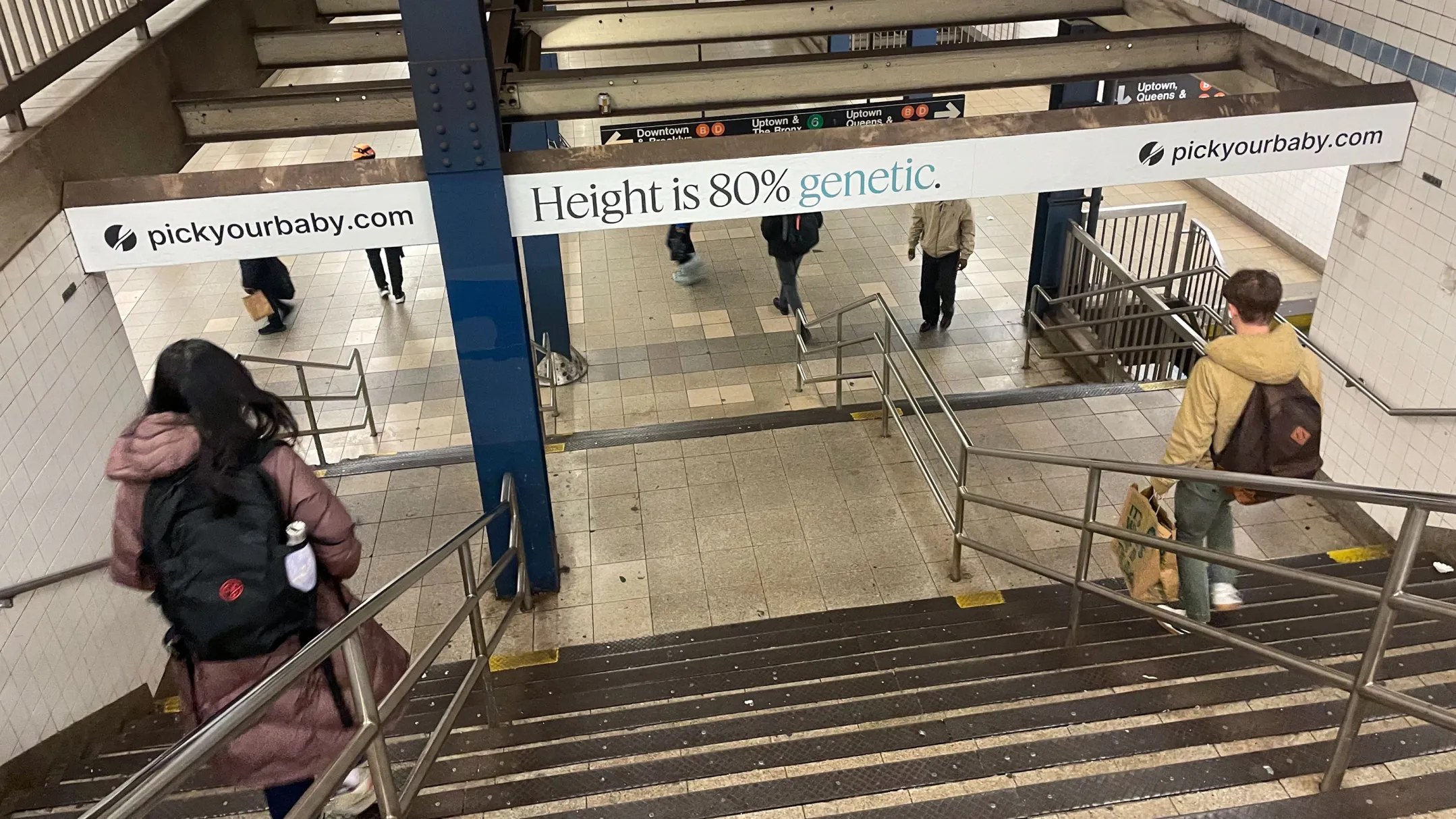
Subway advertising campaign promoting genetic trait selection

You're looking at a controversial subway advertising campaign that blanketed New York City's Broadway-Lafayette station with ads promoting genetic trait selection for embryos. Nucleus Genomics, a startup backed by Founders Fund, ran banners declaring "Height is 80% genetic" and "IQ is 50% genetic" to normalize the idea that parents can pick and choose their baby's traits through embryo testing.

The 26-year-old founder compared his genetic optimization service to makeup and Airbnb, hoping to make embryo selection as accessible as cosmetics. While the technology could lead to healthier babies, critics worry it's promoting discrimination based on height, intelligence, and appearance. The MTA blocked some ads saying "Have a girl" or "Have a boy" as discriminatory, yet somehow allowed the height and IQ claims to run across 1,000 train cars.

Read Full Story
Martin's Corner

Martin's Corner

Thanks for being here for another issue of DevTech news.

There were so many interesting stories from this month that it was a struggle to choose the final lineup. The same goes for tools. Kimi is one that is both a story and a tool. I ultimately omitted it from the main content because I think the appetite for yet another LLM is probably low. However, if you do get geeked out on the topic, Kimi hit some impressive benchmarks in recent testing — especially for coding. And it has this AI agent swarm feature that piqued my interest.

That's it for February. If you come across any interesting stories, tools, or other content that you think would make a solid inclusion in the March issue, feel free to shoot me an email. Have a great month.