

Interactive Tech Journalism
Issue 9 β€’ May 2026
πŸ‘‹

Welcome to DevTech News

I apologize for publishing this month's issue a bit later than usual. In Slovak we have a saying: trpezlivosΕ₯ ruΕΎe prinΓ‘Ε‘a. It translates to patience brings roses. It's the English equivalent of good things come to those who wait, and since you've been patiently waiting, there are indeed good things coming your way. Probably the most amusing story is about a French programmer who accidentally gained control of 7,000 robot vacuums across 24 countries, but there are plenty of others. Let's get started.

Below are the headline stories for May 2026:

Featured Stories

πŸ’»

DevTech

πŸ’»

Why This Developer Is Scrapping 234 AI-Generated Commits and Starting Over by Hand

After 7 months and 234 commits building k10s β€” a GPU-aware Kubernetes dashboard β€” entirely through vibe coding with Claude, developer Shiv Bhosale is archiving the project and rewriting it from scratch. The 1,690-line god object that emerged from AI-generated features worked beautifully in isolation but collapsed under its own complexity when views started interfering with each other. "AI builds features, not architecture," he concluded.

His detailed post-mortem reveals five critical patterns that emerge from AI-assisted coding: god objects as the default artifact, velocity illusion that widens scope, positional data time bombs, and concurrent state mutations that work "99% of the time." Each insight comes with concrete CLAUDE.md directives to prevent the same mistakes. The rewrite is happening in Rust, by hand, with architecture decisions made upfront instead of emergent from prompts.

Read Full Article

Quick Hits

Emmanuela Opurum, a DevOps and Cloud Solutions Architect, walks through building a production-grade CI/CD pipeline from scratch using GitHub Actions, Docker, and AWS ECS.

Read Article

Drawing from three production implementations, freelance developer Durgesh Pawar explains how to build local-first web architecture, where client devices hold primary data copies rather than servers, enabling instant interactions and offline functionality.

Read Article
πŸ€–

AI

πŸ€–

Chinese Courts Outlaw AI-Driven Firings as Meta Surveils Workers to Train Their AI Successors

On the 28th of April, courts in Hangzhou ruled that a Chinese tech company illegally fired a quality-assurance worker named Zhou after trying to slash their salary from 25,000 to 15,000 yuan because AI could do the job cheaper. The Intermediate People's Court was unambiguous: deploying AI is a deliberate business strategy, not an unforeseeable catastrophe, and companies cannot offload the cost of their own technological choices onto employees. The court ruled that firms must prioritize retraining workers and offer them reasonable reassignments.

Meanwhile, in a parallel development, a week before the Hangzhou court ruled to protect Chinese workers, the American company Meta announced it would begin capturing U.S. employees' mouse movements, clicks, keystrokes, and screenshots to train AI agents designed to replace those same workers. The replacing is underway as you're reading this, with Meta expecting to lay off up to 20% of its workforce by the end of this month (May). Unfortunately for them, Chinese labor law does not apply in the U.S.A.

Read the Hangzhou Story Read the Meta Story

Quick Hits

The 2026 US/Israel vs Iran conflict is the first major war where both sides have used AI-generated propaganda to present a narrative. This has led to an unprecedented situation that experts are calling "a structural collapse of trust in authentic content."

Read Article

Google Chrome has been silently installing a 4GB local LLM called "Gemini Nano" on users' computers without explicit consent.

Read Article
πŸ›‘οΈ

CyberSec

πŸ›‘οΈ

Discord Group Breaches Anthropic's "Too Dangerous to Release" AI Model by Guessing URL

Anthropic's Mythos AI model, internally classified as too dangerous for public release due to advanced capabilities, was compromised in April through an embarrassingly simple attack vector: a Discord group correctly guessed the access URL. The breach exposed what researchers describe as one of the most powerful AI systems ever created, capable of sophisticated autonomous operations that Anthropic deemed too risky for general availability.

The incident highlights a troubling disconnect between frontier AI companies' safety rhetoric and basic operational security practices. While Anthropic invested heavily in alignment research and safety frameworks, the breach occurred due to inadequate access controls rather than sophisticated nation-state tactics or zero-day exploits. Security experts warn that as AI capabilities advance, the industry's failure to implement elementary security measures creates systemic risks that extend far beyond traditional data breaches.

Read Full Article

Quick Hits

28 fraudulent apps on Google's Play Store collectively amassed 7.3 million downloads by falsely claiming to provide call histories for any phone number. Users paid between $6 to $80 USD for subscriptions, only to receive randomly generated fake data.

Read Article

Hackers tricked DigiCert support agents into opening a malicious file disguised as a screenshot through customer chat, leading to a breach that allowed them to steal EV Code Signing certificates.

Read Article
🏹

BioTech

🧠

Brazilian Scientists Use Ultrasound to Destroy Viruses Without Harming Human Cells

Researchers at Brazil's University of SΓ£o Paulo discovered that high-frequency ultrasound waves (3–20 MHz) can eliminate influenza A and SARS-CoV-2 viruses through acoustic resonance, leaving healthy cells untouched. The mechanism operates through geometric resonance β€” spherical virus particles absorb ultrasound energy, causing internal vibrations that rupture the viral envelope.

As lead researcher Odemir Martinez Bruno explains: "The energy of sound waves causes morphological changes in viral particles until they explode, a phenomenon comparable to what happens with popcorn." The technique works against viral variants since effectiveness depends on particle shape, not genetics, and generates no waste while creating no environmental impact. In-vitro testing is underway against dengue, Zika, and Chikungunya.

Read Full Article

Quick Hits

Purdue University scientists developed a technique to grow soft, flexible electrodes directly inside living mouse brains. Once fully formed, the electrodes can be controlled from outside the skull to temporarily control aspects of brain activity without surgery.

Read Article

Do you remember the Jesse Grass character from The Simpsons? He's the one who boldly declared to Lisa that he is a level 5 vegan: he doesn't eat anything that casts a shadow. Well, thanks to modern science, companies like Savor and Solar Foods are building actual business models around the level 5 concept.

Read Article
🌐

Around the Web

🌐

Scientists Capture "Dark Points" in Light Waves That Move Faster Than Light

An international research team has observed "dark points" called vortices within light waves that can exceed the speed of light. Using a modified high-speed electron microscope capable of capturing images over three quadrillionths of a second, the researchers stacked hundreds of images to create timelapses that show vortices occasionally surpassing the speed of light during collisions.

The findings confirm a 1978 theoretical prediction by physicist Michael Berry. They also provide researchers with enhanced microscopy techniques to observe nanoscale phenomena in materials. Rather than enabling warp drives, the discovery allows scientists to study "hidden processes in physics, chemistry, and biology" at unprecedented speeds.

Read Full Article

Quick Hits

A French programmer accidentally gained control of 7,000 robot vacuums across 24 countries while trying to connect his own vacuum to a PlayStation controller. Sammy Azdoufal discovered a massive security flaw in DJI's cloud servers that gave him access to live camera feeds, microphone audio, and floor plans from the devices.

Read Article

23 major news organizations including The New York Times, USA Today, Reddit, and The Guardian have blocked the Internet Archive's Wayback Machine from crawling their sites. The outlets cite AI training concerns and anti-scraping measures, but critics note the hypocrisy: these same organizations use the Wayback Machine for their own investigative reporting.

Read Article
πŸ’¬

It's How They Said It

"Massive numbers of students are going to emerge from university with degrees, and into the workforce, who are essentially illiterate."
β€” Troy Jollimore, a Cal State Chico ethics professor, warning about AI's impact on critical thinking skills in higher education.
πŸ”’

The Numbers Game

πŸ’₯
2
MINUTES
is all it took for security consultant Paul Moore to completely bypass the European Commission's newly launched Digital Age Verification App, designed to protect minors from harmful online content. Moore exploited critical flaws in the app and demonstrated on his X account how he was able to complete a full authentication bypass.
Read More
πŸ΄β€β˜ οΈ
76%
OF CRYPTO
hack losses in 2026 were claimed by North Korea, amounting to approximately $577 million in stolen funds. What makes that figure darkly impressive is that it wasn't achieved through high-volume attempts. It took just two precisely targeted attacks, representing only 3% of the total incident count for the year, but they walked away with 76% of the bag.
Read More
πŸ’Ό
1,100
CLOUDFLARE STAFF
representing about 20% of the company's workforce, were laid off this month (May) as CEO Matthew Prince attributed the cuts to AI efficiency gains. The company determined that automation could handle support and administrative functions previously requiring human staff. The layoffs occurred even as Cloudflare achieved record revenue.
Read More
βš’οΈ

Tools and Resources

✨🎬

Anime.js

A lightweight JavaScript animation library that brings smooth, professional animations to the web with an intuitive API. At just 24.50 KB with modular components, you can animate CSS properties, SVG elements, and DOM attributes using flexible keyframes, built-in easing functions, and advanced features like motion path creation and shape morphing. The library handles everything from simple transitions to complex timeline orchestrations with scroll-synchronized effects.

Perfect for creating interactive web experiences and modern UI animations without complex setup. The modular architecture lets you import only what you need, while the comprehensive API covers basic transforms to advanced physics-based interactions. Essential for adding polished, performant animations that enhance user experience without the learning curve of heavyweight frameworks.

Check it Out
πŸ“§πŸ€–

Agentic Inbox

A self-hosted email platform that runs entirely on Cloudflare Workers infrastructure, featuring an AI-powered assistant with nine specialized email tools. The system uses Cloudflare Email Routing for message reception, Durable Objects with SQLite for storage, and R2 for attachments, creating per-mailbox isolation with complete data control. The built-in AI agent can automatically generate draft replies to incoming emails, search conversations, and provide intelligent email assistance β€” always requiring human confirmation before sending.

Perfect for developers seeking email independence without vendor lock-in, privacy-conscious users wanting complete data control, and teams looking to integrate AI assistance into their communication workflows. The Apache 2.0 license makes it freely deployable, while the Cloudflare Workers architecture ensures global performance and reliability.

Check it Out
πŸŽ¬πŸ’»

Hyperframes

An open-source framework that converts HTML, CSS, and JavaScript into MP4 videos using headless Puppeteer for frame capture and FFmpeg for encoding. Released by HeyGen in April 2026, Hyperframes enables AI agents to generate videos programmatically by writing standard web code instead of using timeline-based editors. Since large language models write HTML fluently, AI agents like Claude can create fully animated video compositions natively through code.

Perfect for developers who prefer code over GUI video editors, teams building automated video generation pipelines, and AI agents creating dynamic video content. The Apache 2.0 license ensures commercial use without per-render fees, while deterministic rendering guarantees identical output from the same input. Game-changing for programmatic video creation workflows.

Check it Out
πŸ›Έ

What Am I Looking At?

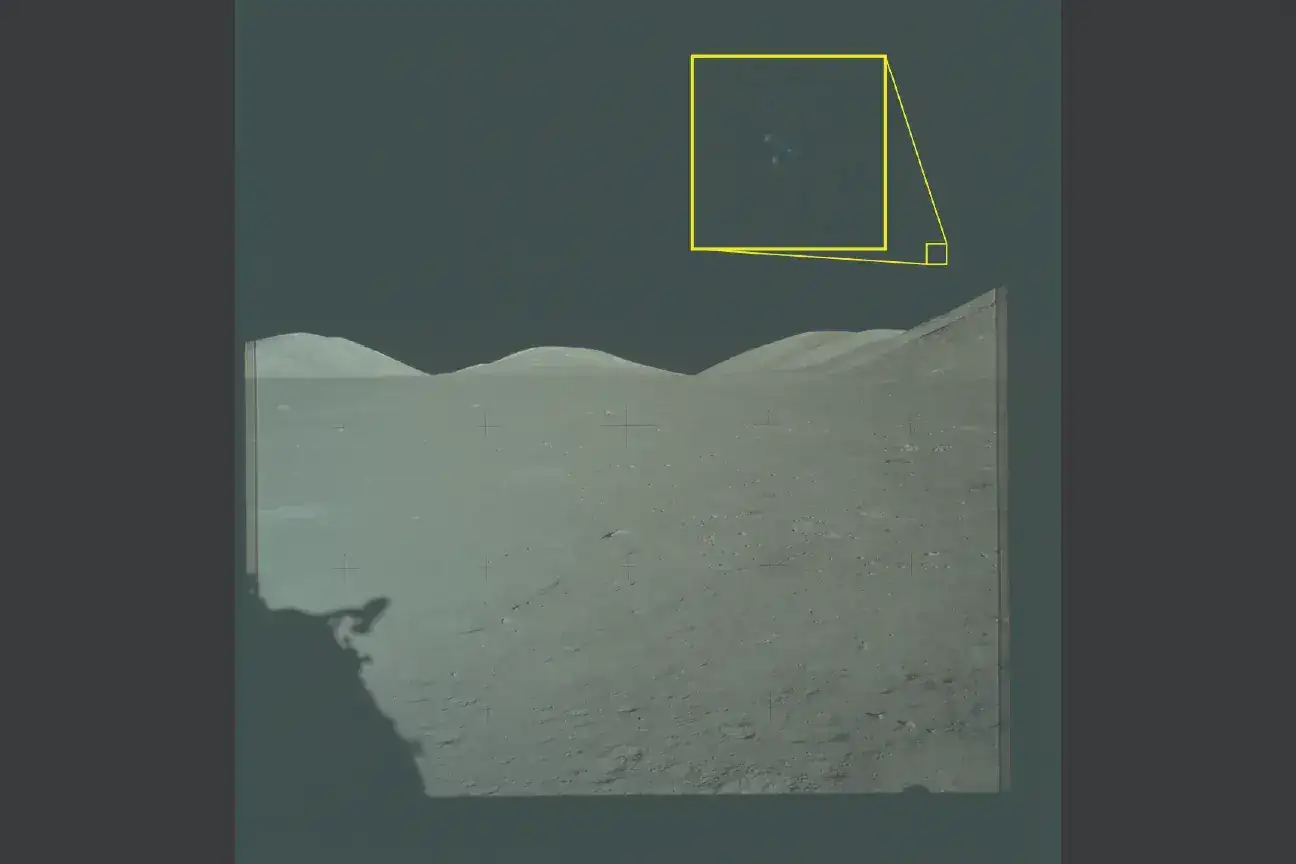
NASA Apollo 17 lunar photograph with three lights visible in triangular formation above lunar terrain

You're looking at NASA-UAP-VM6, archival imagery from the Apollo 17 mission to the Moon in December 1972. On May 8, 2026, the Pentagon, at the direction of President Trump, released a tranche of declassified UAP files under the PURSUE initiative β€” and this photograph was one of the centerpieces. The yellow box shows an enlarged area of the original image with three lights in a triangular formation above the lunar terrain.

The story behind it is more interesting than the dots themselves. UFO researchers have been pointing to this photo for decades as suspicious β€” possibly even evidence of alien craft β€” and the image has been publicly accessible in NASA's Apollo archive the entire time. The May 8 release marks the first time the U.S. government has formally addressed it head-on. The Department of War has opened a case, retrieved the original film negative from NASA storage for fresh analysis, and stated that "new preliminary U.S. government analysis suggests the image feature is potentially the result of a physical object in the scene" β€” language that conspicuously hedges the conclusion before the investigation has finished.

Image Credit: NASA-UAP-VM6, Apollo 17, 1972

Read the Story View Pentagon Gallery
Martin's Corner

Martin's Corner

As always, I appreciate you being here.

Similar to last month, there were some really great stories I came across that didn't fit neatly into the DevTech newsletter format. Two that I wanted to share with you here are about the same broad topic, just covered from opposite sides of the Atlantic.

The first is from a German citizen who made 20 GDPR data deletion requests over the past year. Only 2 companies complied immediately. 6 complied after he filed complaints with regulators. The remaining 12 ignored him entirely β€” and so did the data protection offices.

β†’ Read the GDPR enforcement story

The second is a webXray audit showing Google ignores California's Global Privacy Control signal 86% of the time, Microsoft 50%, and Meta 69% β€” the last of which doesn't even check for the signal. Two continents, same outcome: the rules exist, the enforcement doesn't.

β†’ Read the California privacy audit

Have a great month ahead.